
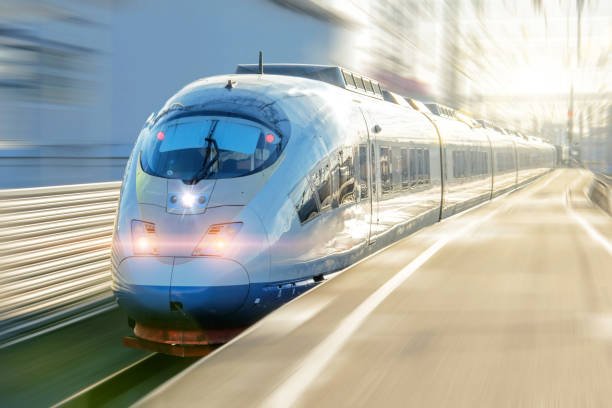

Trains have long been symbols of progress — from the first steam engines that connected distant cities to today’s sleek, futuristic high-speed rails that blur landscapes as they pass. In the 21st century, speed in rail travel isn’t just about breaking records; it’s about transforming how people live, work, and connect. From magnetic levitation marvels to bullet trains slicing across continents, here’s a journey through the top 10 fastest trains on Earth — machines that push the limits of technology and imagination.
1. JR Central L0 Series Maglev — Japan
At the top of the world’s fastest trains sits a futuristic marvel from Japan: the L0 Series maglev. This is not just another high-speed train — it floats above the tracks using magnetic levitation (maglev) and eliminates friction entirely. In tests, it reached speeds of up to 603 km/h (375 mph), making it the fastest rail vehicle ever recorded.
This train represents an incredible leap in rail technology. By removing physical contact with the track, maglev systems reduce wear and tear and allow for extraordinarily high speeds. While this record was set during controlled trials rather than regular commercial service, it showcases where future rail travel could head. Japan plans to introduce maglev commercial lines in the coming years, such as the Tokyo-Nagoya route.
2. CRRC Maglev 600 — Chinain
China is rapidly climbing the ranks of high-speed rail innovation. The CRRC Maglev 600 is a next-generation magnetic levitation train developed by Chinese engineers, designed to cruise at speeds of up to 600 km/h (373 mph) once deployed. Many see it as a direct competitor to Japanese maglev technology.
This train is part of China’s broader vision to modernize transportation infrastructure and establish maglev as a regular feature in high-speed networks. While still under development and not yet fully in commercial service, the CRRC Maglev 600 is poised to challenge speed limits worldwide.
3. TGV (Train à Grande Vitesse) — France
France’s TGV is legendary in the world of fast trains. This iconic bullet train set the world speed record for a conventional wheel-on-rail train when a specially modified TGV reached 574.8 km/h (357 mph) during a test run in 2007.
Even though its regular operational speeds are lower (typically up to around 320 km/h or 199 mph), the TGV’s record stands as a historic achievement in high-speed rail. It blends advanced aerodynamics with precision engineering, and its extensive network remains one of Europe’s busiest and most reliable.
4. Shanghai Maglev Train — China
In the realm of commercially operating trains, the Shanghai Maglev currently leads the pack. Running between Shanghai Pudong International Airport and Longyang Road Station, this train uses maglev technology to reach regular operating speeds of around 460 km/h (286 mph).
This system was launched in 2004, making it the world’s first high-speed commercial maglev service. Unlike wheel-on-rail trains, its magnetic levitation and propulsion system allows incredibly smooth acceleration and deceleration, making it both fast and efficient.
5. China Railway CR450 — China
The CR450 is another Chinese high-speed train pushing the boundaries of conventional rail. Designed to operate at speeds of up to 400 km/h (249 mph) and with prototype tests achieving 453 km/h (282 mph), this train blends powerful performance with innovative design.
Part of China’s “Fuxing” family of high-speed trains, the CR450 exemplifies the country’s commitment to expanding and upgrading its rail network. These trains run on established high-speed lines and are expected to become common sights across China’s vast rail map.
6. CR400 Fuxing — China
China’s CR400 “Fuxing” series has become a symbol of high-speed rail modernization. Operating at top speeds of around 350 km/h (217 mph), Fuxing trains connect major urban centers such as Beijing and Shanghai, drastically reducing travel times.
These trains are designed for comfort, reliability, and efficiency, making them among the most advanced high-speed trains in regular use globally. With futuristic interiors and powerful acceleration, they continue to set benchmarks for high-speed rail travel.
7. DB Intercity-Express 3 (ICE 3) — Germany
Germany’s ICE 3 trains represent the pinnacle of German rail engineering. These trains regularly operate at speeds up to 330 km/h (205 mph) on routes within Germany and across neighboring countries.
The ICE 3 family features distributed power systems, sleek designs, and advanced safety systems that make them favorites of international travelers. Their speed and connectivity help tie together European cities efficiently.
8. Shinkansen E5 — Japan
Japan’s bullet trains — collectively known as the Shinkansen — were among the first true high-speed trains in the world. The E5 series, operated by JR East, can reach speeds of up to 320 km/h (199 mph) in commercial service.
Beyond speed, the Shinkansen are famous for reliability and punctuality, with delays measured in seconds rather than minutes. Their success has made Japan a global leader in high-speed rail technology for decades.
9. Al Boraq — Morocco
Africa’s high-speed entry, Al Boraq, connects major Moroccan cities like Casablanca and Tangier. Operating at up to 320 km/h (199 mph), it’s one of the fastest trains outside Asia and Europe. �Railway NewsIntroduced in recent years, Al Boraq has significantly improved transport infrastructure in North Africa and showcases how high-speed rail can transform regional mobility.
10. AVE Class 103 — Spain
Spain’s AVE Class 103 bullet trains round out the top ten. Running at speeds of up to 310 km/h (193 mph) on lines like Madrid-Barcelona, these trains balance speed with comfort on long-distance journeys.
Spanish high-speed rail has become a model for expanding fast connections across countries and is celebrated for its modern stations and efficient services.
Conclusion: What’s Next in High-Speed Rail?
The race for rail speed continues. Today’s fastest trains already connect cities faster than ever, but future innovations — including vacuum-tube systems and next-generation maglevs — could make today’s speeds look slow. Engineers and governments worldwide are exploring ways to push beyond 600 km/h while maintaining safety, comfort, and sustainability.
From the whirring maglevs of Asia to the sleek steel giants of Europe and Africa, these trains are more than just fast machines — they’re tools reshaping how we travel, work, and live in a connected world.